SpearsScandinavia, 9th–10th c.
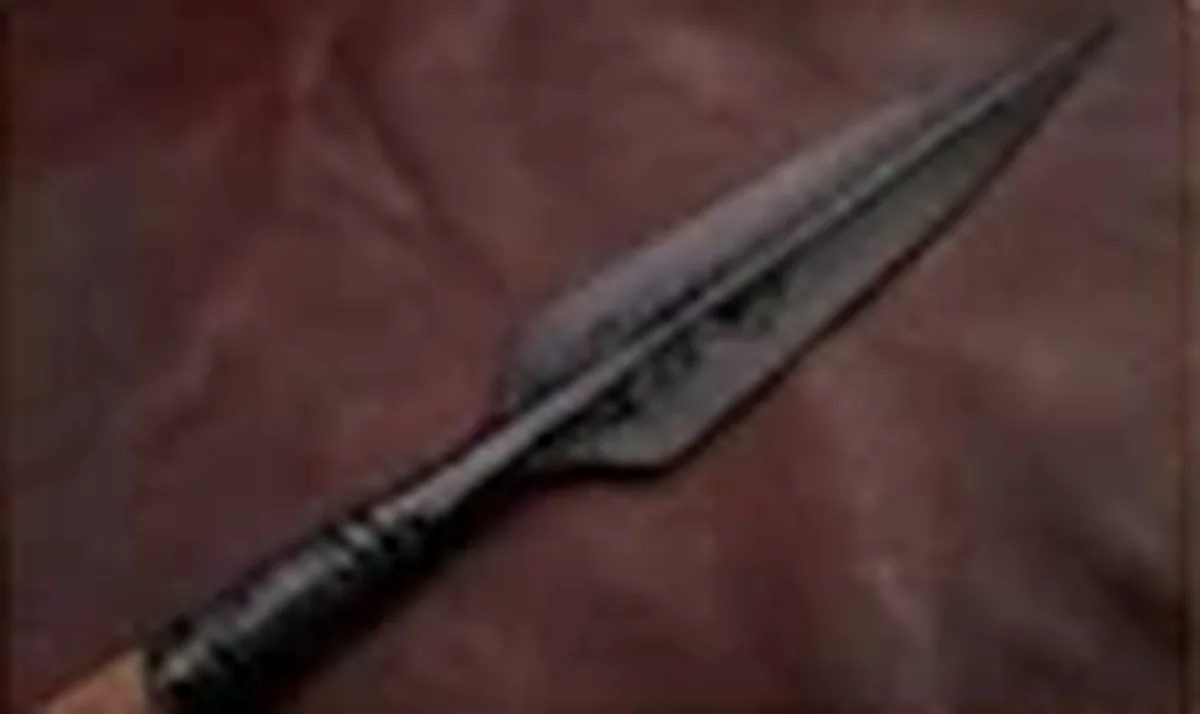
Spearhead “Gungnir”
Leaf-shaped spearhead with a socket for the shaft, 1065 carbon steel
- Length
- 38 cm
- Weight
- 0.42 kg
PLN 660Ships in 2 working days

Blacksmith-made
The spear was the most common weapon of the Viking Age — cheaper than a sword and more effective in formation. I hand-forge leaf-shaped, winged and lozenge spearheads with a forged socket for the shaft, as well as complete spears on ash shafts.
Leaf-shaped spearhead with a socket for the shaft, 1065 carbon steel
Nothing in the forge matches these filters.
A leaf-shaped spearhead has a broad, flat, leaf-like blade — it cuts and thrusts well. A winged spearhead (with “wings” at the base) stops the blade going in too deep and helps bind the opponent's weapon. A narrow lozenge spearhead with a thick cross-section was made for piercing mail.
Each of my spearheads has a socket rolled hot, which fits onto the shaft and is fixed with a rivet or nail. The socket can be decorated with engraving or with copper or brass wire inlay — just like on 9th–10th-century spearheads.
A spearhead alone is a good choice for re-enactors who have their own shafts, and for collectors — it looks great on a wall or stand. A complete spear I fit on an ash shaft matched to your height; parcels over 150 cm are quoted individually.
The end of the shaft is tapered to fit the socket, the head is pushed on tight and fixed with a rivet or nail through the hole in the socket. I give the socket diameter for every spearhead, so you can easily match a shaft.
Usually 2–3 metres including the shaft. Shorter spears (about 1.8–2 m) were for close fighting and throwing, longer ones for fighting in formation.
Working spearheads are sharpened; re-enactment spearheads are blunted with a rounded point. You'll find this information on every product.
Only essential cookies. More